BOVINE IMAGES

How to use these images


IMPORTANT: To see an enlarged image, click on any image you see in LORI. Then, RIGHT click on the enlarged image to save it at its full size.


Showing posts with label management. Show all posts

Monday, August 5, 2013

Dairy cattle. Estrous detection


Keywords: estrus, detection,infertility management, mounting, crowding, signs, computer, programs


Estrus detection is a major challenge for dairy farmers, especially as cows produce more milk and their endocrine profiles are modified.

In a group of animals such as this, the farmer will spend time looking for any cows that may be allowing mounting by another cow; a sign of standing estrus. Allowing mounting is however prone to misinterpretation in a situation such as this. These cattle are crowded and even cows that are not in heat may be mounted because they are unable to move away from the cow attempting to mount them.

Additional signs of estrus in a cow include rubbing of the hair on the base of the tail, mucous discharges from the vulva, dried mucus on the tail, restlessness and mud on an animal's flanks from when others have attempted to mount it. After estrus, metestral discharges will be seen. Although metestral discharges inform the farmer that estrus has just been missed, they can be used to determine the time of onset for the next estrus period or in proactive situations, when prostaglandin should be given to shorten the luteal phase.

As shown at lower right, a farmer is consulting a 21-day estrous detection chart from this herd, to determine if mounting is real or spurious. Telemetry devices that monitor cow movement and sophisticated dairy management computer programs are also available to assist farmers in estrus detection.

Wednesday, July 31, 2013

Estrous mucus discharge in a cow


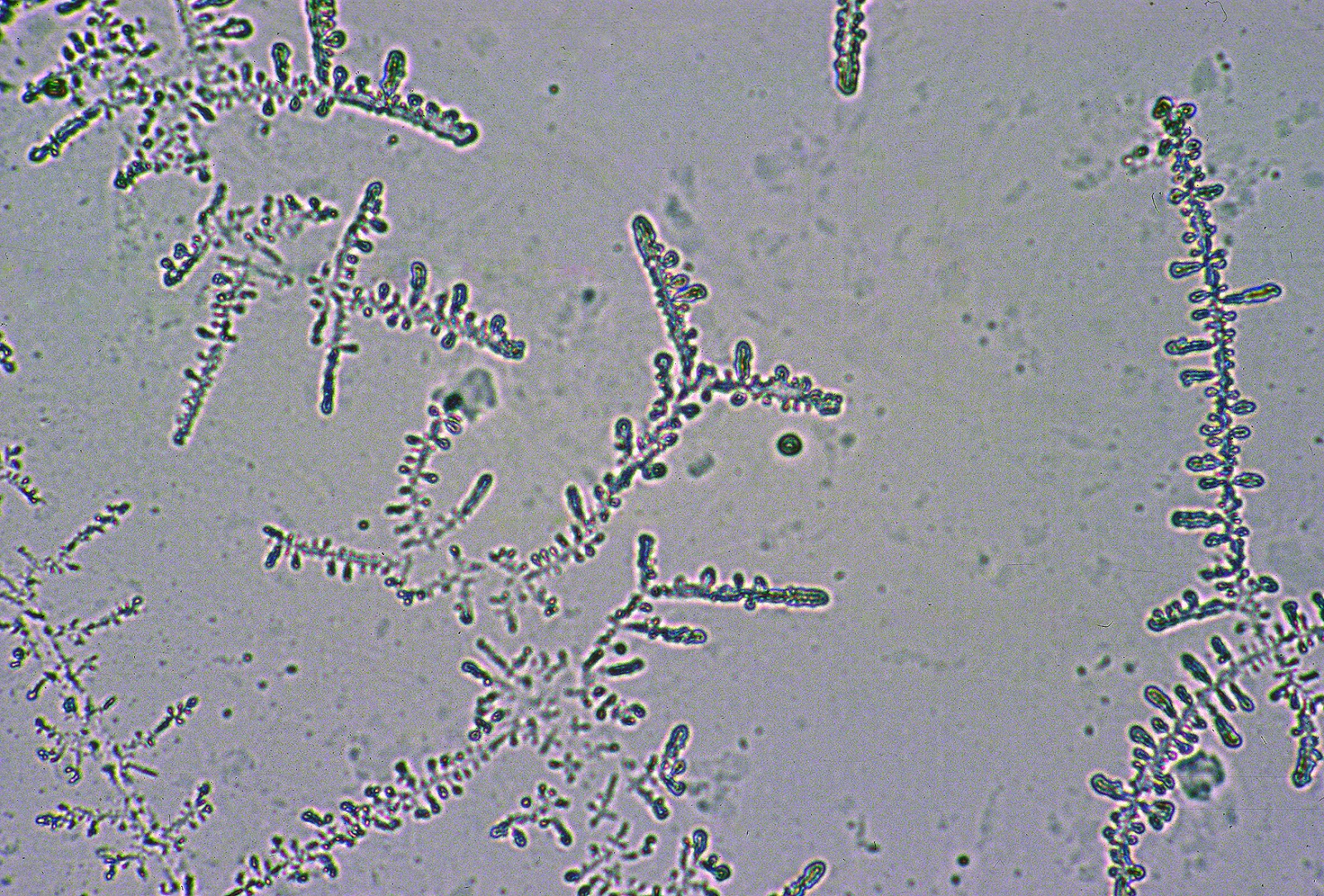
Keywords: mucus, bovine, estrus, detection, management, dairy, insemination, salt, ferning, crystals


A clear mucous discharge seen at the time of estrus in a cow; an important part of estrous detection in dairy cattle. In some cases, this clear mucous secretion may accumulate in the cranial vagina and be discharged some days after estrus. This mucus contains substantial amounts of sodium chloride (salt). When it is smeared and the salt dries on a glass slide, it generates a so-called "ferning" pattern as seen below.


This mucus is generated by the cervical glands. Therefore, in the case of a persistent hymen, a vaginal mucous discharge is never seen. The mucus accumulates cranial to the hymen where it becomes stained black in color because of metestral hemorrhagic discharges. 

Cervical mucus on the tail of a cow


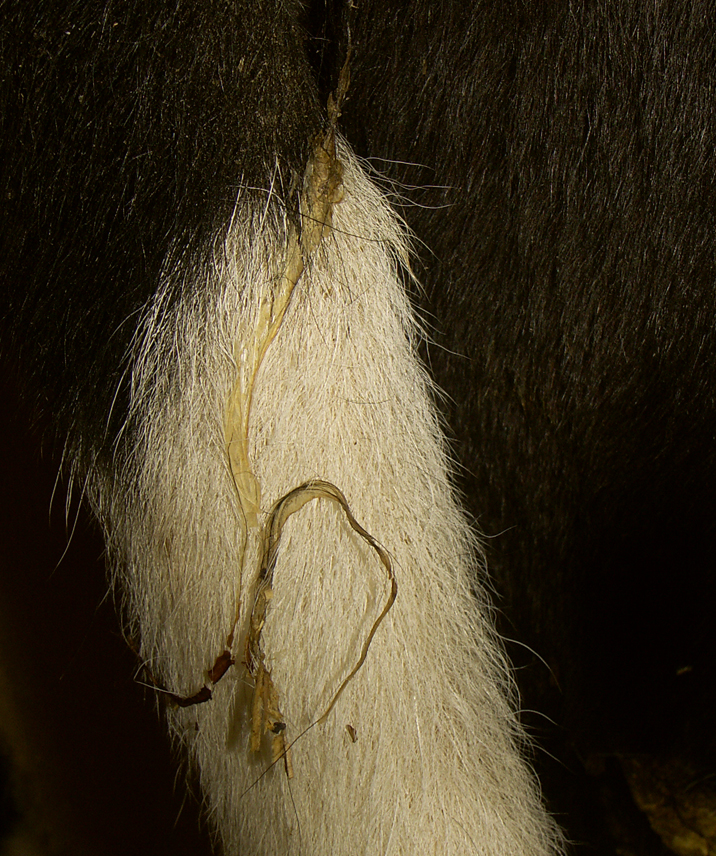
Keywords: estrus, mucus, management, bovine, dairy, detection


Dried cervical mucus on the tail of a cow. Sometimes this may be the only evidence of a mucus discharge in a cow. In some cattle it is very difficult to detect standing estrus; every possible cue must be taken into account. These include increased activity, decreased milk production, increased vocalizing, mucus discharges from the vulvar lips and after estrus, hemorrhagic metestral discharges.

Friday, July 26, 2013

Metestrus 1: Metestral hemorrhage in bedding.


Keywords:  metestrus, bovine, management, cow, estrous, cycle, detection, hemorrhage


Image size:454 x 326px

This is seen in about 50 to 60% of cows and 75 to 85% of heifers.  It is usually seen in the first 48 hours after ovulation but because the vagina may slope downward at its cranial end (especially in older animals) vaginal mucus and metestral hemorrhage may be retained in the vagina for several days, being discharged several days after estrus. If metestrus is suspected, one should look at the rump of the animal and her dung and bedding where there is often evidence of hemorrhage.

Careful observation is warranted because hemorrhage may be difficult to spot:


Image size: 750 x 526 px

Metestrus 2: Metestral hemorrhage on the tail


Keywords:  metestrus, bovine, management, cow, estrous, cycle, detection, hemorrhage


Image size: 1584 x 2816px

This is seen in about 50 to 60% of cows and 75 to 85% of heifers.  It is usually seen in the first 48 hours after ovulation but because the vagina may slope downward at its cranial end (especially in older animals) vaginal mucus and metestral hemorrhage may be retained in the vagina for several days, being discharged several days after estrus. If metestrus is suspected, one should look at the rump of the animal and her dung and bedding where there is often evidence of hemorrhage.

Metestrus 3: Metestral hemorrhage on the tail 

Typical metestral hemorrhage; seen on the tail of a cow.


Image size: 1584 x 2816px

This is seen in about 50 to 60% of cows and 75 to 85% of heifers.  It is usually seen in the first 48 hours after ovulation but because the vagina may slope downward at its cranial end (especially in older animals) vaginal mucus and metestral hemorrhage may be retained in the vagina for several days, being discharged several days after estrus. If metestrus is suspected, one should look at the rump of the animal and her dung and bedding where there is often evidence of hemorrhage.

Metestrus 4. Hemorrhage seen in bedding 

Typical metestral hemorrhage; seen on the bedding of a cow.


This is seen in about 50 to 60% of cows and 75 to 85% of heifers.  It is usually seen in the first 48 hours after ovulation but because the vagina may slope downward at its cranial end (especially in older animals) vaginal mucus and metestral hemorrhage may be retained in the vagina for several days, being discharged several days after estrus. If metestrus is suspected, one should look at the rump of the animal and her dung and bedding where there is often evidence of hemorrhage.

Metestrus 5. Hemorrhage seen in bedding

Keywords:  metestrus, bovine, management, cow, estrous, cycle, detection, hemorrhage


Image size:1164 x 774px

This is seen in about 50 to 60% of cows and 75 to 85% of heifers.  It is usually seen in the first 48 hours after ovulation but because the vagina may slope downward at its cranial end (especially in older animals) vaginal mucus and metestral hemorrhage may be retained in the vagina for several days, being discharged several days after estrus. If metestrus is suspected, one should look at the rump of the animal and her dung and bedding where there is often evidence of hemorrhage.

Metestrus 7. Hemorrhage on the rump of a cow.

Keywords:  metestrus, bovine, management, cow, estrous, cycle, detection, hemorrhage


Image size:1584 x 2816px

Typical metestral hemorrhage; seen on the rump of a cow that was recently in heat. This is seen in about 50 to 60% of cows and 75 to 85% of heifers.  Metestral hemorrhage is usually seen in the first 48 hours after ovulation but because the vagina may slope downward at its cranial end (especially in older animals) vaginal mucus and metestral hemorrhage may be retained in the vagina for several days, being discharged several days after estrus. If metestrus is suspected, one should look at the rump of the animal and her dung and bedding where there is often evidence of hemorrhage.

Cattle are the only domestic animals that show hemorrhage as a result of estrogen withdrawal.

Kamar heatmount detector

Keywords:  Kamar, bovine, management, cow, estrous, cycle, detection


The Kamar device is applied to the rump of a cow with adhesive. When the cow is in standing estrus and allows another cow to mount her, a chamber containing dye is crushed, turning the device red throughout its length. Although valuable, the device is prone to false positives in crowded barns when cows are moving in or out of the building; in such cases mounting may be less specific than otherwise.