BOVINE IMAGES

How to use these images


IMPORTANT: To see an enlarged image, click on any image you see in LORI. Then, RIGHT click on the enlarged image to save it at its full size.


Showing posts with label dairy. Show all posts

Wednesday, July 31, 2013

Estrous mucus discharge in a cow


Keywords: mucus, bovine, estrus, detection, management, dairy, insemination, salt, ferning, crystals


A clear mucous discharge seen at the time of estrus in a cow; an important part of estrous detection in dairy cattle. In some cases, this clear mucous secretion may accumulate in the cranial vagina and be discharged some days after estrus. This mucus contains substantial amounts of sodium chloride (salt). When it is smeared and the salt dries on a glass slide, it generates a so-called "ferning" pattern as seen below.
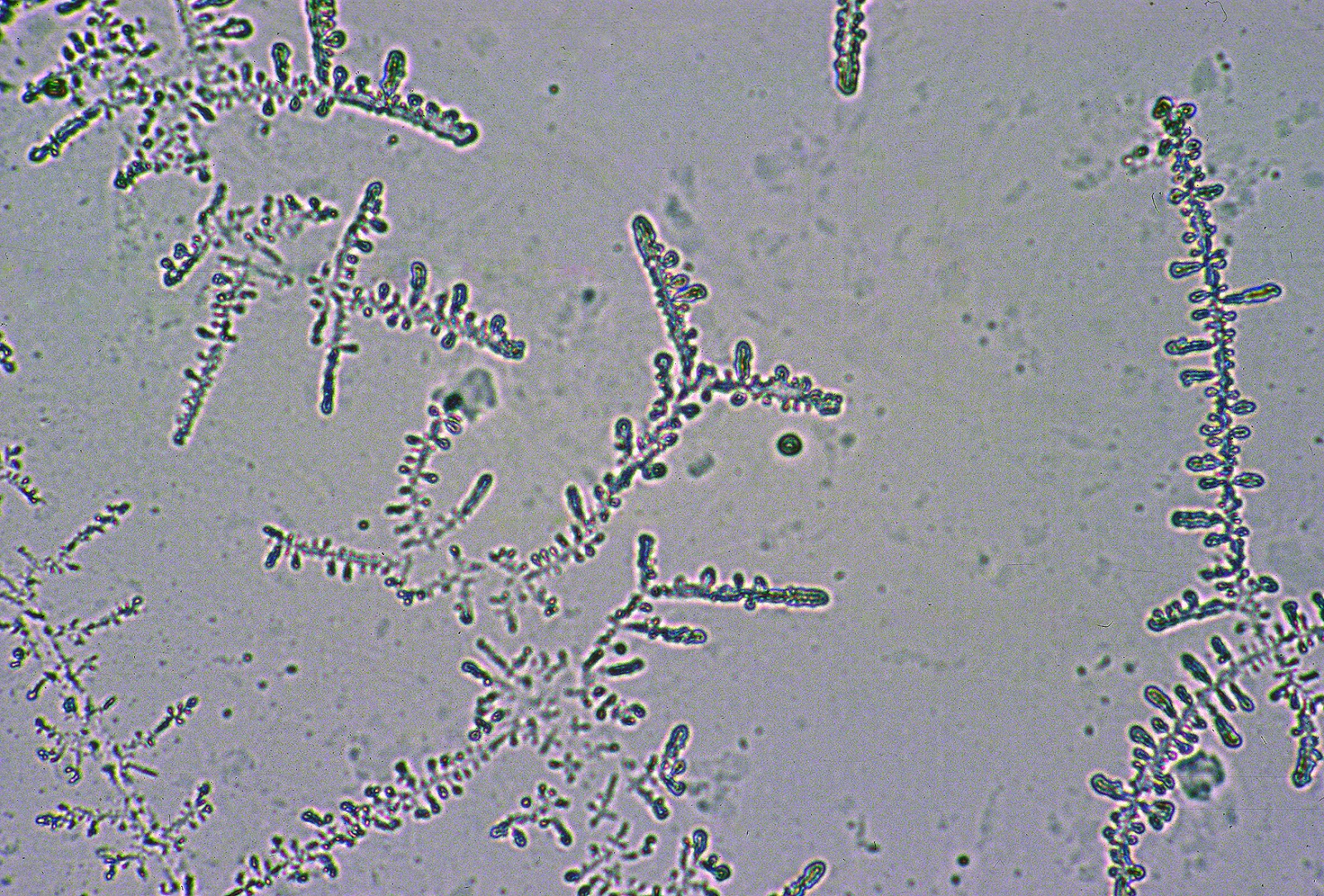

This mucus is generated by the cervical glands. Therefore, in the case of a persistent hymen, a vaginal mucous discharge is never seen. The mucus accumulates cranial to the hymen where it becomes stained black in color because of metestral hemorrhagic discharges. 

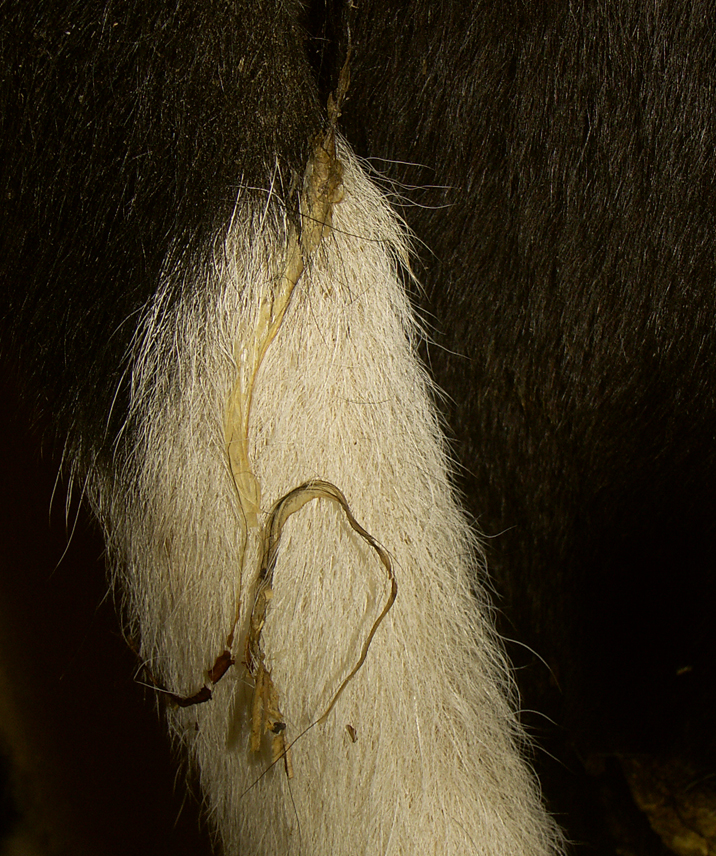
Cervical mucus on the tail of a cow


Keywords: estrus, mucus, management, bovine, dairy, detection


Dried cervical mucus on the tail of a cow. Sometimes this may be the only evidence of a mucus discharge in a cow. In some cattle it is very difficult to detect standing estrus; every possible cue must be taken into account. These include increased activity, decreased milk production, increased vocalizing, mucus discharges from the vulvar lips and after estrus, hemorrhagic metestral discharges.

Friday, July 26, 2013

Kamar heatmount detector

Keywords:  Kamar, bovine, management, cow, estrous, cycle, detection


The Kamar device is applied to the rump of a cow with adhesive. When the cow is in standing estrus and allows another cow to mount her, a chamber containing dye is crushed, turning the device red throughout its length. Although valuable, the device is prone to false positives in crowded barns when cows are moving in or out of the building; in such cases mounting may be less specific than otherwise.

Cystic follicle in a cow


Keywords:  anestrus, COD, cyst, cystic, follicle, bovine, management, cow, estrous, cycle


Reproductive tract from a cow with cystic ovarian disease (COD); a syndrome associated with high milk production and negative energy balance in high producing dairy cows. COD is usually associated with persistence of large, un-ovulated follicles in the absence of standing estrus, probably because of luteinization (with progesterone production) of the cystic structures due to low pulsatile releases of LH. Nevertheless, this illustration shows that ovulation occasionally occurs in the presence of a cystic follicle. Note the corpus luteum in the left ovary, in the same ovary as the cyst.

In these cases, the cyst may then regress and may even be replaced by other cysts until ovulation becomes predictable and cyclicty returns to normal.

This illustration also suggests that luteinization of cystic follicles may be so limited that they not produce enough progesterone to suppress LH and block ovulation.

The terminology of COD can be confusing, with cystic follicle occasionally being referred to as luteal cysts. In the author's opinion this term should not be used because it can be confused with a structure called a cystic corpus luteum; a non-pathological entity. Instead, when a cyst becomes luteinized it should be called a luteinized cyst rather than a luteal cyst.